The Post-Smartphone Era Is Closer Than Anyone Realizes
For more than a decade, the smartphone has been the center of digital life.
It replaced cameras.
GPS devices.
MP3 players.
Wallets.
Even desktop computers for many users.
But every dominant technology eventually reaches saturation.
And subtle signals suggest the post-smartphone era may be closer than most people think.
This shift won’t happen overnight.
It will unfold gradually — through integration, distribution, and invisibility.
Saturation Has Slowed Innovation
Smartphone upgrades no longer feel revolutionary.
Faster processors.
Better cameras.
Slightly brighter screens.
The hardware cycle has matured.
Global smartphone penetration is high.
Most consumers already own capable devices.
When growth slows, companies search for the next platform.
That platform may not fit in your pocket.
The Rise of Wearables
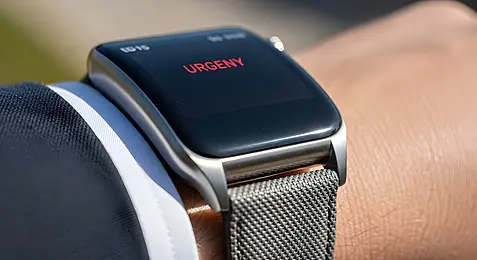
Smartwatches already handle:
- Notifications
- Payments
- Health tracking
- Quick responses
Wearable devices reduce the need to constantly reach for a phone.
Add augmented reality glasses to the equation, and screen dependency begins to shift.
If navigation overlays appear in your field of vision, why check a phone?
Wearables distribute functionality across the body instead of centralizing it in one device.
Ambient Computing Is Expanding
Technology is moving toward ambient systems — tools that operate in the background.
Voice assistants respond without screens.
Smart homes adjust automatically.
Cars integrate navigation, messaging, and media seamlessly.
Instead of opening apps, systems anticipate needs.
As prediction improves, interaction decreases.
The device becomes less visible.
AI Reduces Direct Engagement
Artificial intelligence personalizes digital experiences automatically.
Your calendar adjusts.
Your route recalculates.
Your streaming platform recommends content.
As AI anticipates behavior, manual searching declines.
The more predictive technology becomes, the less users need to manage devices actively.
The smartphone shifts from command center to fallback interface.
The Fragmentation of Devices
The future may not revolve around one device.
Instead, it may involve a network:
- Wearables for health
- Smart speakers for communication
- AR glasses for information
- Embedded car systems for mobility
Each device handles specialized tasks more efficiently than a single smartphone.
Distributed computing reduces reliance on a central hub.
The Attention Economy Factor
Screen fatigue is real.
Constant notifications and scrolling impact focus and mental health.
Consumers increasingly value frictionless systems that reduce active screen time.
Voice and gesture interfaces feel less intrusive than visual screens.
The demand for less visible technology is growing.
Economic Incentives Drive Platform Shifts
Major technology companies are investing heavily in:
- Augmented reality
- Virtual reality
- Spatial computing
- Advanced wearables
Why?
Because the smartphone market is mature.
The next trillion-dollar platform requires new interaction models.
Companies are preparing for life beyond handheld screens.
What “Post-Smartphone” Really Means
Post-smartphone does not mean phones disappear instantly.
It means their central dominance fades.
Just as desktops remain relevant but no longer define computing, smartphones may become secondary tools.
Primary interaction may move toward:
- Spatial interfaces
- Voice-first systems
- Seamless device ecosystems
The device becomes invisible infrastructure.
The smartphone changed the world.
But technology never stands still.
The post-smartphone era won’t look like a dramatic replacement.
It will look like gradual redistribution.
Functionality will spread across devices.
Interaction will feel more natural.
And over time, the screen in your hand may matter less than the systems surrounding you.
The future isn’t about a better phone.
It’s about needing it less.